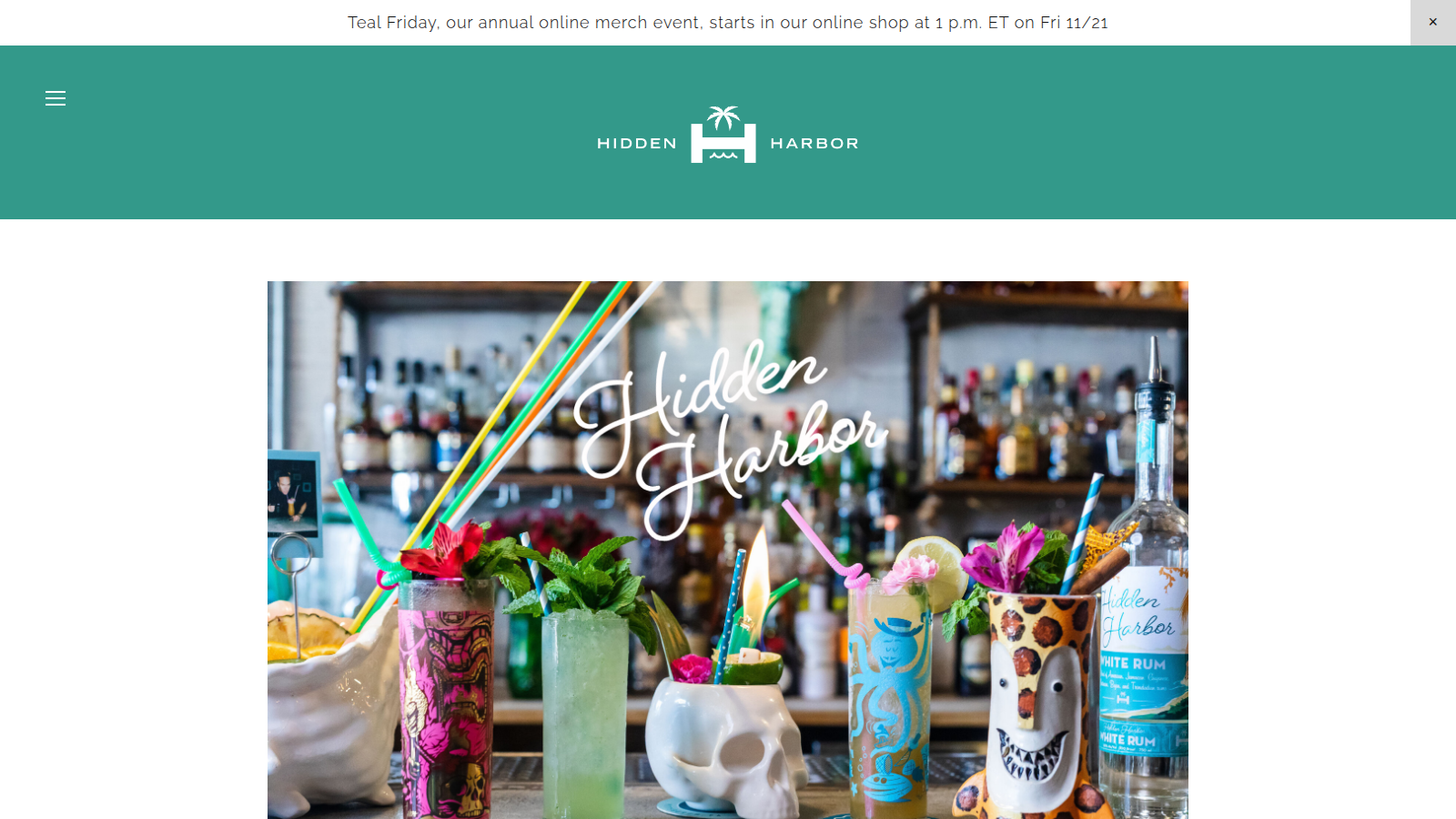
Hidden Harbor remains one of Pittsburgh’s most important tropical bars, with a reputation built on hospitality, island eats, and a drinks list that has repeatedly been recognized both locally and nationally.
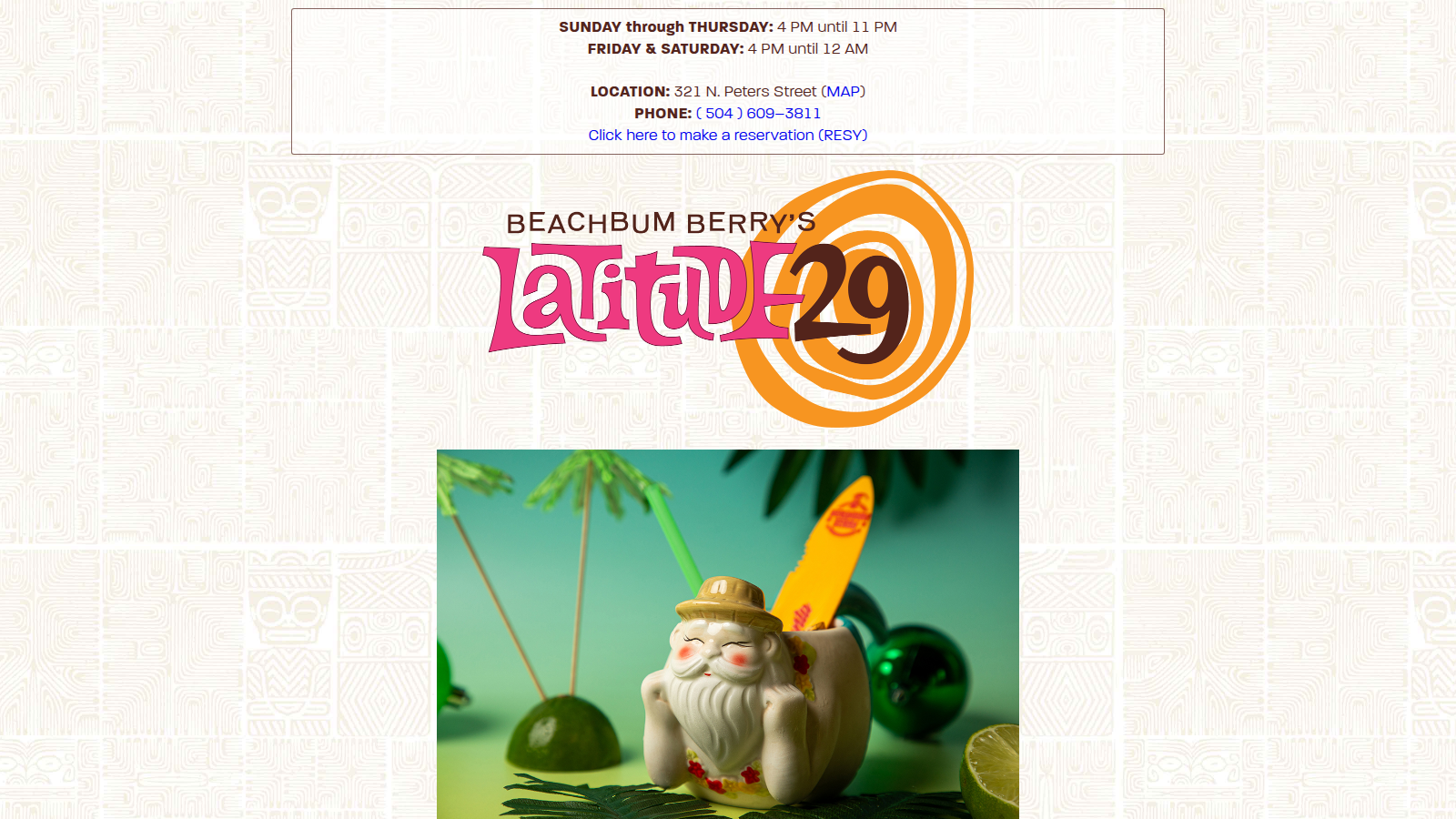
Beachbum Berry’s Latitude 29 is one of New Orleans’ marquee modern tiki rooms, pairing Zombies, Mai Tais, and other exotic cocktails with “PolynAsian” food inside the Bienville House Hotel in the French Quarter.
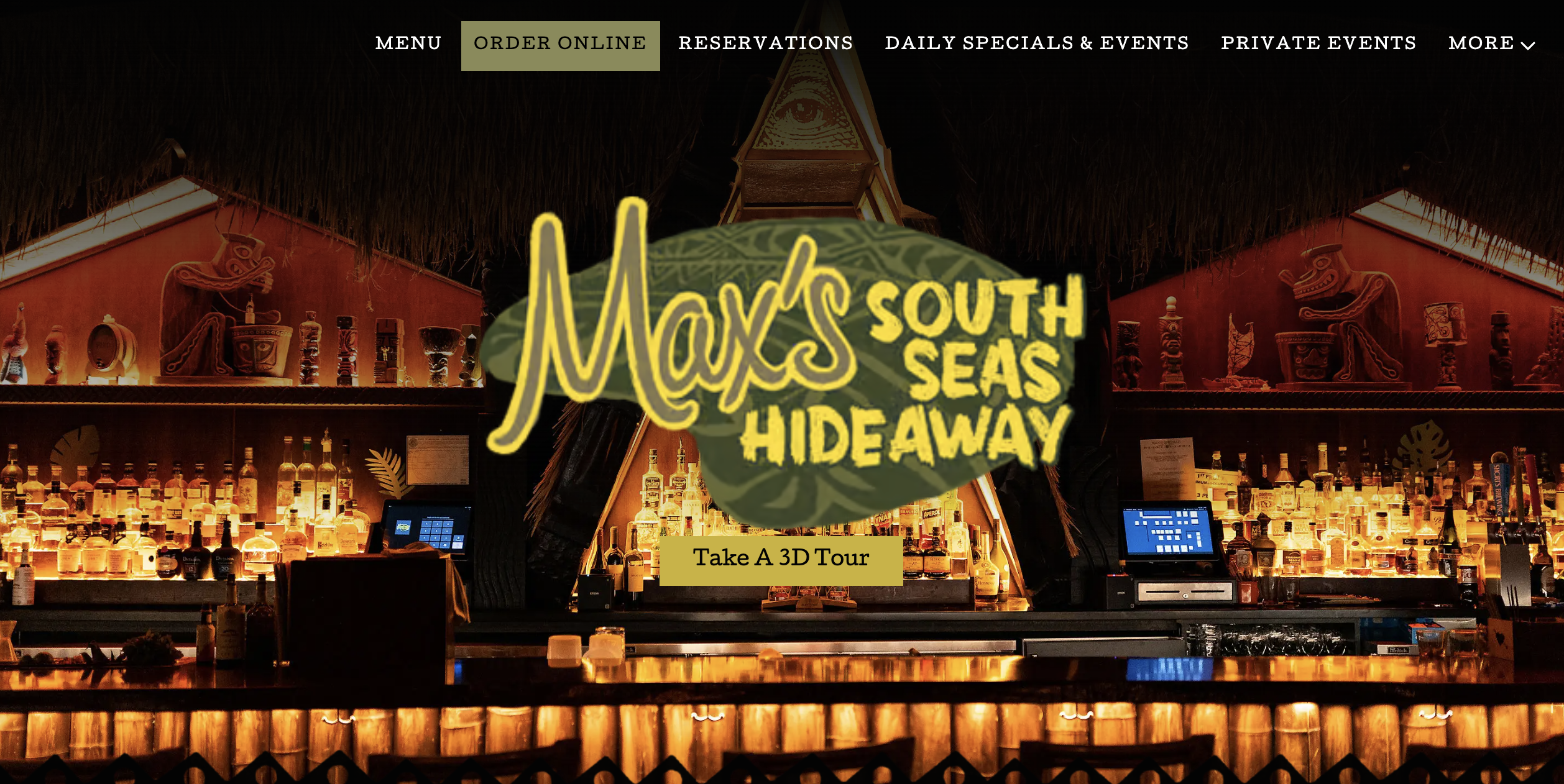
Max’s South Seas Hideaway was conceived as a full-scale Grand Rapids tiki restaurant and bar, with craft cocktails, a serious decorative program, and enough space to feel like an event destination.
Adrift positions itself as a tropical getaway in the middle of Denver, with Polynesian- and Caribbean-inspired cocktails and food doing most of the work. Fresh ingredients and a warm service style keep the room accessible, even while the bar leans into the escapist side of the genre.
The Ship’s Hold presents itself less as a lore-heavy tiki room than as a hospitality-driven waterfront-adjacent bar and event space in St. Petersburg. The event focus is strong in the current site, but the maritime identity still gives the room a place in the broader tropical-bar landscape.
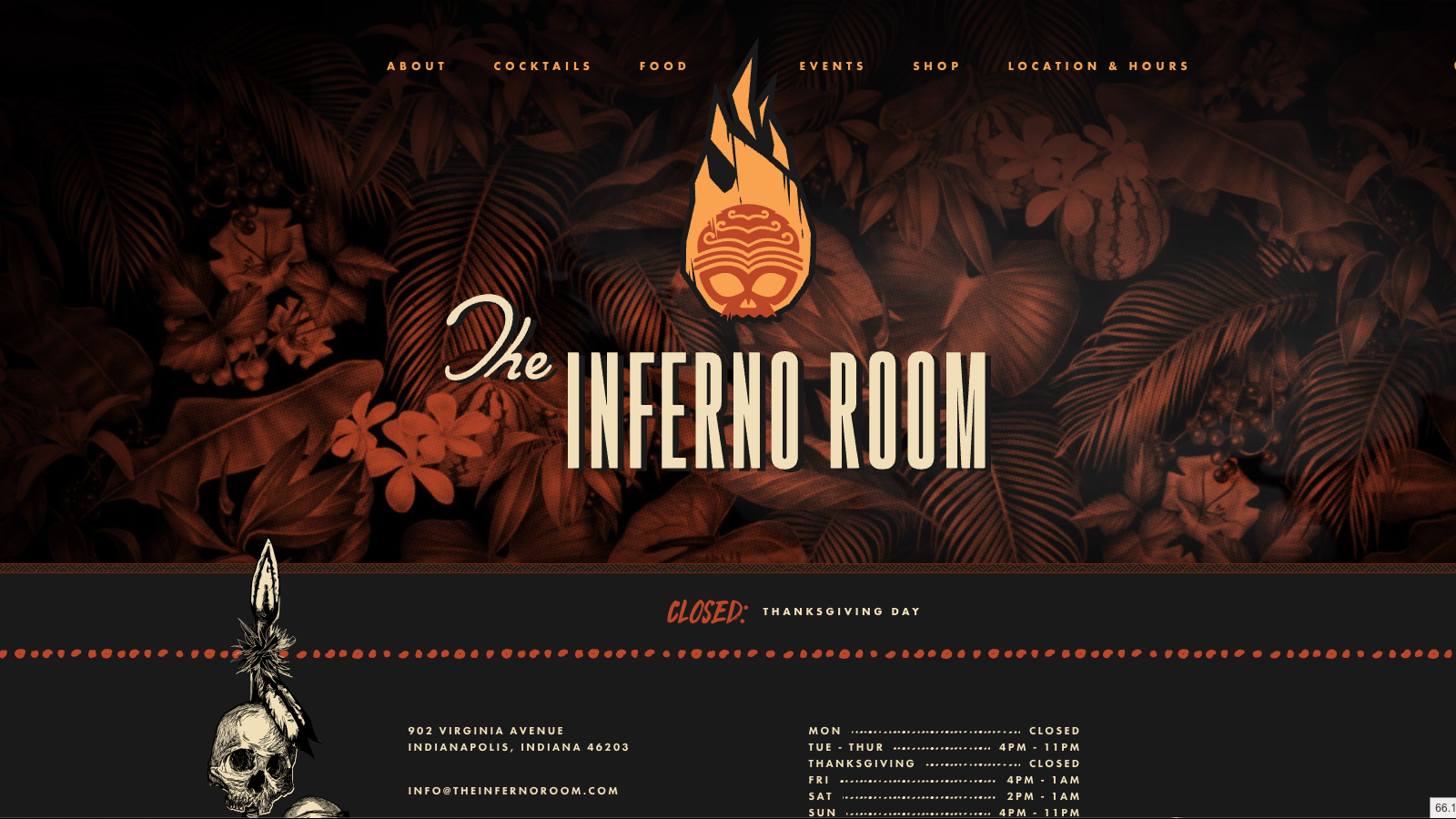
The Inferno Room is Indianapolis' dedicated Fountain Square tiki destination, with a full dinner-and-drinks room, late hours, and enough commitment to the format to host its own Infernohana festival.
Mutiny Bar keeps things direct: a Detroit tiki bar with nighttime hours, a neighborhood footprint, and a focus on drinks over spectacle. Its smaller scale makes it feel more like a regulars’ room than a destination build, which suits the southwest Detroit setting.
Lost River has been one of Detroit’s key rum-focused cocktail bars, with a reputation built on ambitious drinks and one of the largest rum selections in Michigan. Even with the concept in motion, it remains an important reference point in the city’s modern tropical-cocktail scene.
Wusong Road fuses New England Chinese cooking with a high-energy tiki bar just outside Harvard Square, making it one of the more distinctive modern hybrids in the category.
Blossom Bar sits inside a restaurant context rather than a standalone tiki room, but its cocktail reputation keeps it relevant to this map. In Brookline it is known as much for drinks as for food, which gives it a stronger crossover appeal than bars that stay locked inside one lane.
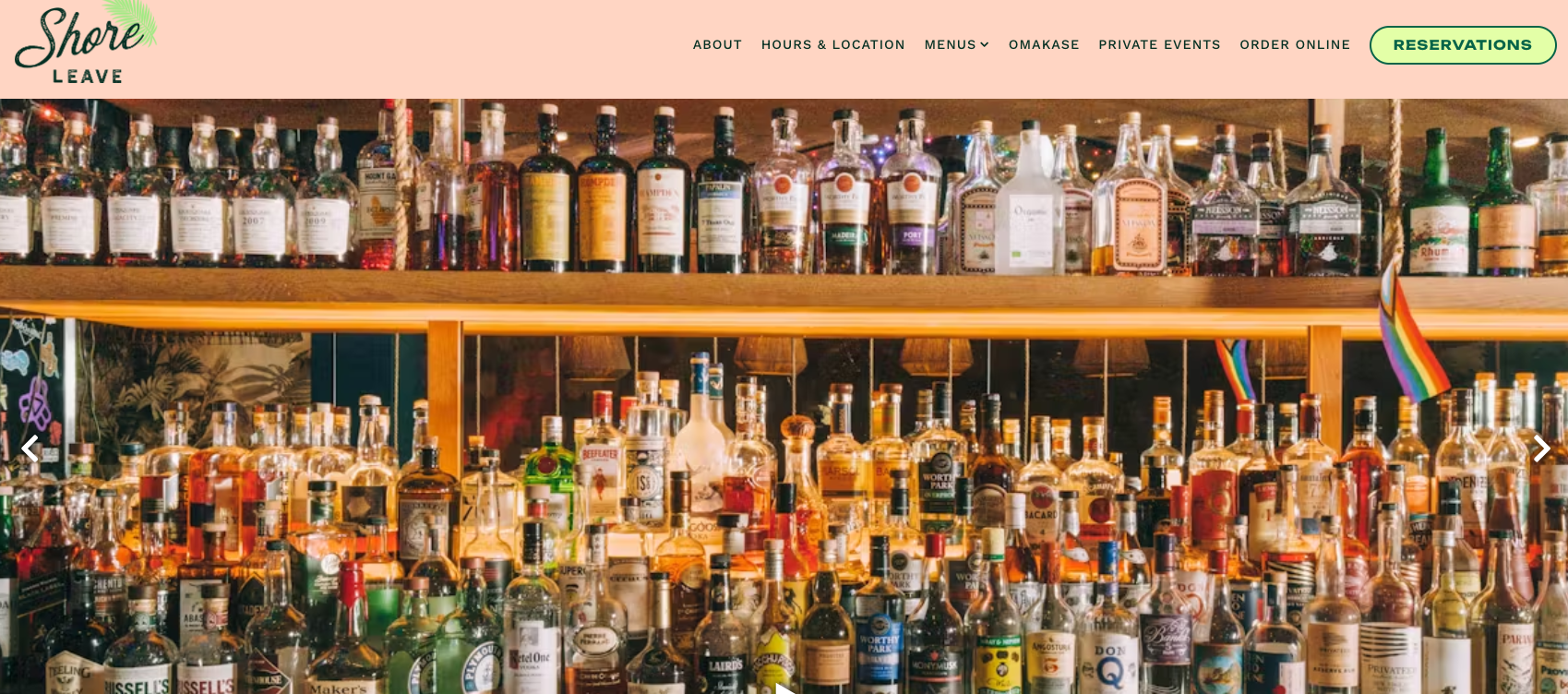
Shore Leave brings an underground tropical-bar mood to Boston, but it broadens the format with sushi, share plates, burgers, and a late-night food focus. The result feels more like a full dinner-and-drinks hangout than a strict revivalist tiki room, which is part of its appeal.
Kahala Koa frames itself as more than a cocktail bar, with a curated collection of tiki artifacts and drinks meant to tell the story of tiki and ohana as much as serve it.
Speak of the Devil in downtown Lorain approaches the category from the cocktail-bar side first, with a focus on fresh ingredients, careful execution, and a broad spirits program.
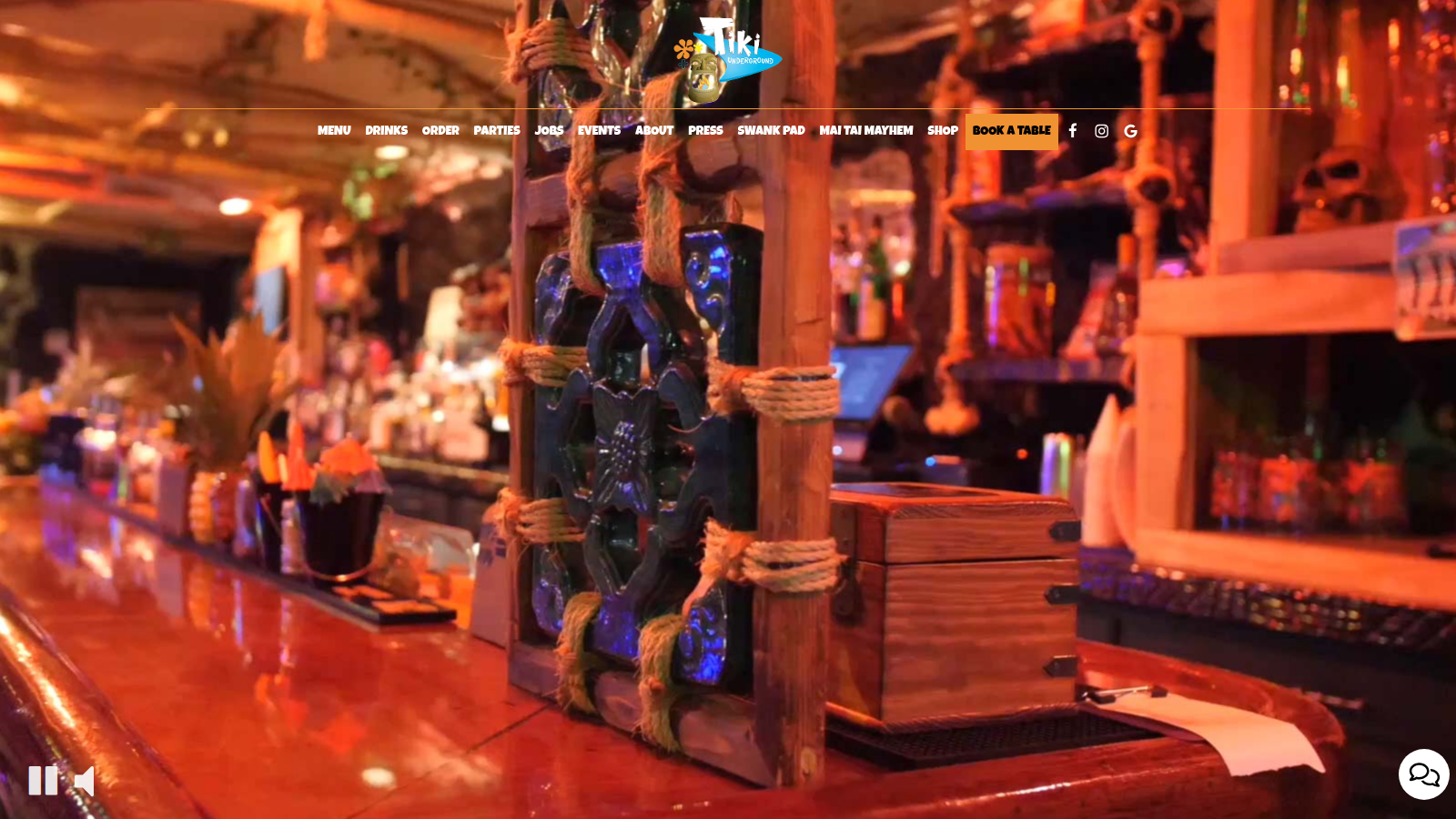
Tiki Underground gives downtown Cuyahoga Falls a tropical bar that mixes regular events, DJs, and flea-market culture with a recognizable tiki identity.
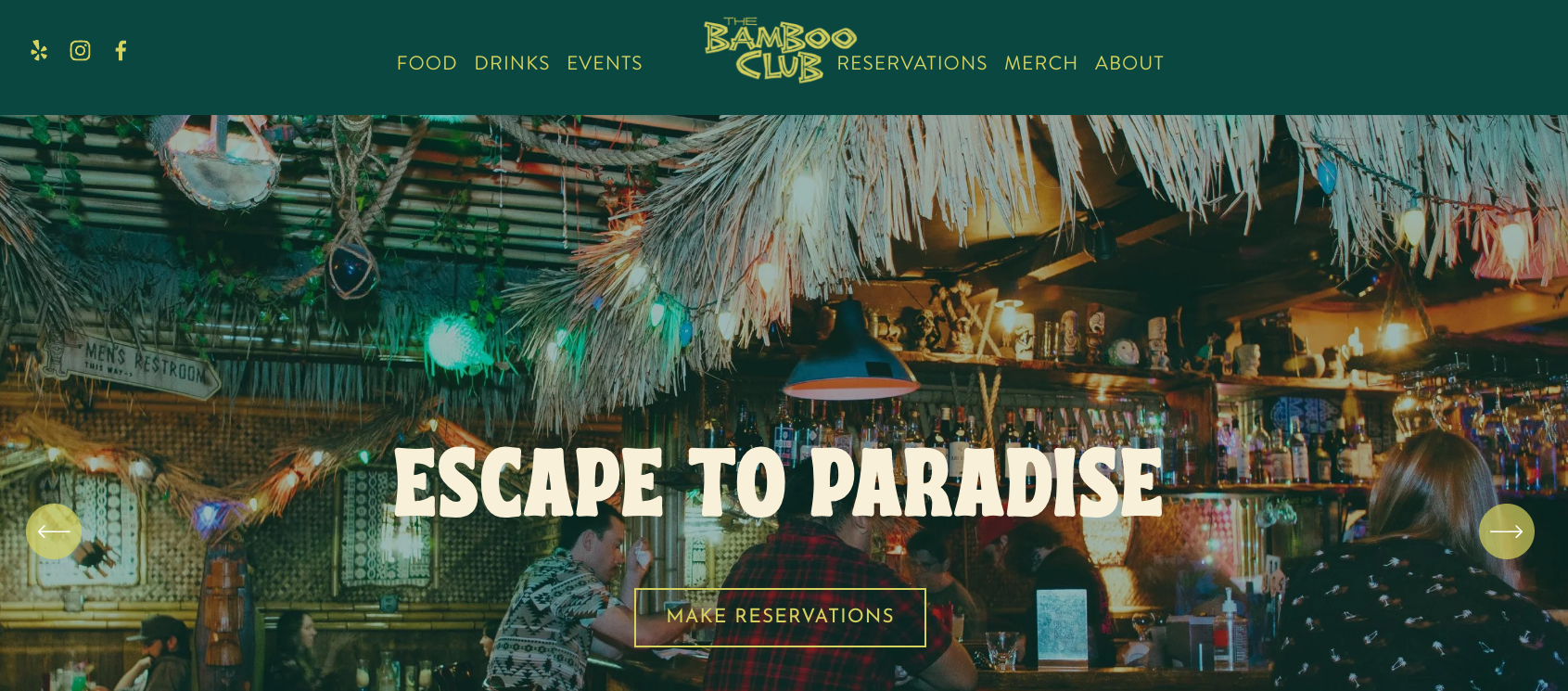
The Bamboo Club in Long Beach combines a broad food menu, happy hour culture, and a recognizable tiki-and-classics drinks program, making it more of a full-service tropical restaurant and bar than a drinks-only destination. That flexibility is part of what has made it stick.
Kahala Koa frames itself as more than a cocktail bar, with a curated collection of tiki artifacts and drinks meant to tell the story of tiki and ohana as much as serve it.